
Last updated: October 2026

Auto insurance rates have stopped climbing. Home premiums haven’t. Shoppers are collecting more quotes than ever, carriers are spending billions to reach them, and the rules for calling and texting leads changed again this fall.
For agency owners, 2026 isn’t the crisis market of 2023 and 2024. It’s a competition market. The agencies that grow this year will be the ones that reach shoppers first, quote the whole household, and stay on the right side of compliance.
Here are the nine trends driving auto and home insurance in 2026, the numbers behind each one, and what each means for your sales pipeline.
1. Auto insurance has turned into a soft market
After years of double-digit increases, auto pricing has flattened. Personal auto combined ratios improved to 92% in 2025 from 112% in 2022, the best result since 2020, according to BCG. Carriers that spent 2022 – 2024 raising rates and shedding risk are now competing for growth again.
Consumer prices show it. Insurify found the average full-coverage premium fell 6% to $2,144 in 2025 and expects only about a 1% rise in 2026. Rate filings are mixed: of the auto rate revisions that took effect in Q2 2026, 36% were decreases, 38% were increases and 27% were neutral, according to LexisNexis Risk Solutions. In Florida, the five largest auto groups are indicating an average rate change of about – 8% for 2026.
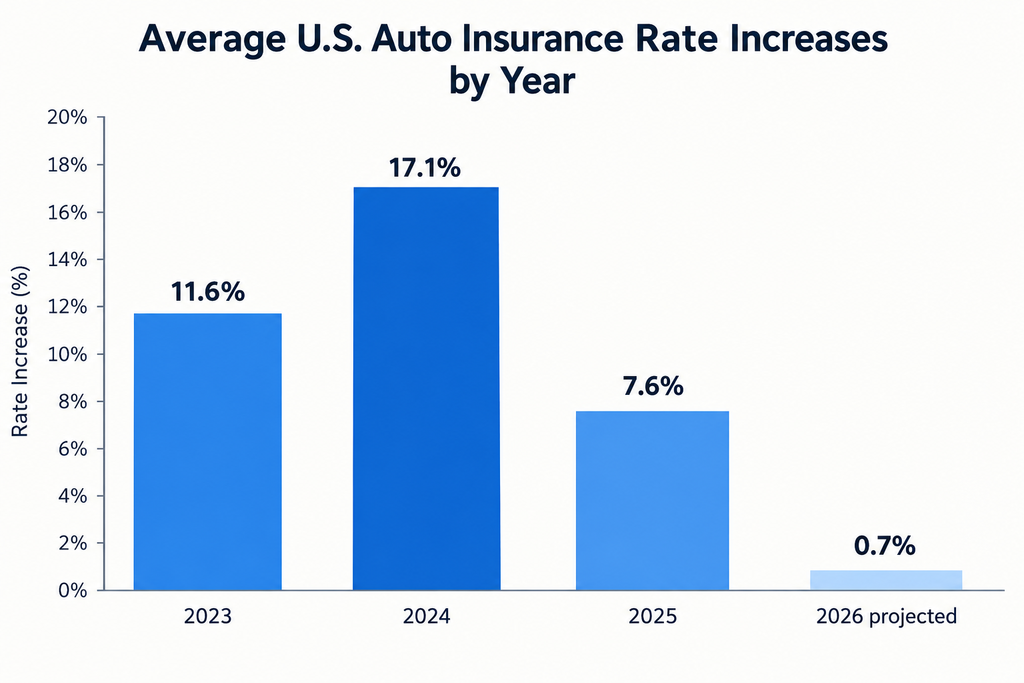
What it means for your agency: Your existing book is exposed. When competitors cut rates, your clients hear about it from ads, apps and AI tools. Re-quote renewals before they shop, and expect new prospects to be anchored on the lowest number they’ve already seen.
2. Shopping is still near record levels and it’s going digital
Fewer people are shopping out of panic, but nearly half the market is still in motion. J.D. Power’s 2026 U.S. Insurance Shopping Study found the share of customers shopping for auto insurance dipped from 57% to 53%, still high by historical standards. Shoppers now collect an average of 3.5 quotes, the most in the study’s 20-year history, and 48% of new auto policies are bought digitally, up from 36% five years ago.
LexisNexis data tells the same story: at the end of Q2 2026, 47.2% of auto policies in force had been shopped at least once in the previous 12 months.
What it means for your agency: Every lead you buy is comparing you with three or more other carriers, often in another browser tab. The agent who has the first real conversation usually sets the price anchor and the relationship. That’s why speed to lead matters more in 2026, not less.
3. Carriers are spending billions to win those shoppers
Soft markets bring ad wars. Progressive reported $1.4 billion in advertising expense in Q2 2026, 16% more than a year earlier, and 18% more across the first half of the year, according to its quarterly filing. LexisNexis notes that advertising and the convenience of digital shopping, not just rate hikes, are becoming stronger reasons for consumers to shop.
There’s good news for captive agents. In Q2 2026, shopping growth in the exclusive-agent channel rose for a third straight quarter, to 6.8%, and outpaced both the direct and independent channels for the first time since Q2 2022. Direct-channel growth slowed to 4.6% from 9.4%.
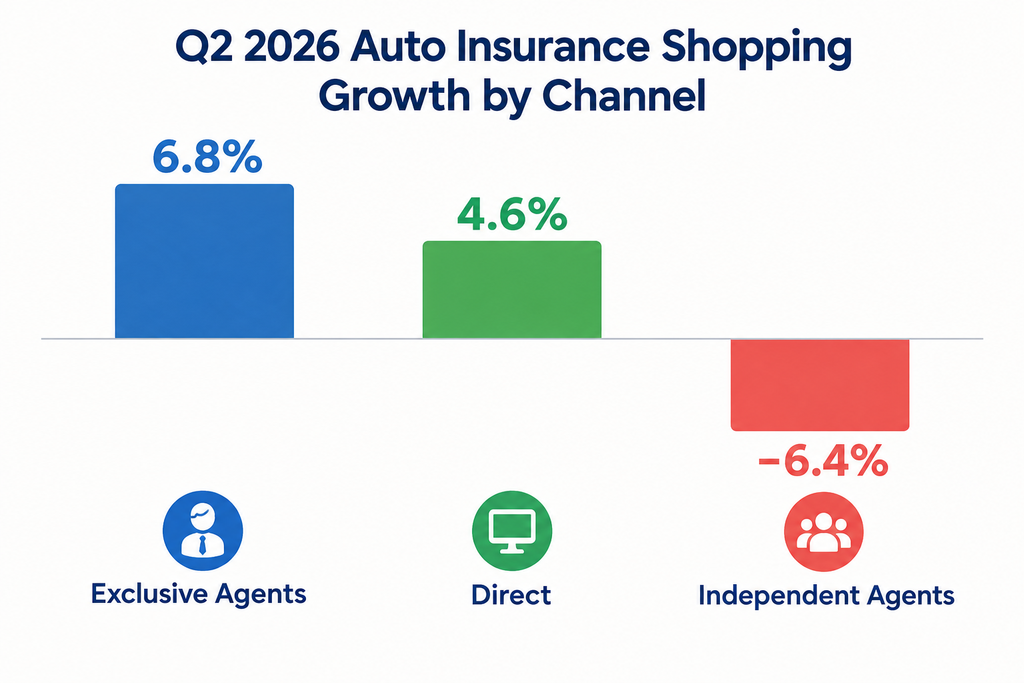
What it means for your agency: You can’t outspend national carriers on TV, and you don’t need to. Your edge is a licensed local agent who calls back fast and explains coverage clearly. The leads you already pay for are your cheapest growth, if you actually reach them.
4. Repair costs keep a floor under auto premiums
Rate relief isn’t reaching everyone. Vehicles cost more to fix, and more of them are being totaled. CCC Intelligent Solutions’ Crash Course 2026 report found total losses reached a record 23.1% of auto claims in 2025, with the average repair costing $4,818, as summarized by InsureMojo. Tariffs add pressure: Insurify estimates that if tariffs significantly raise repair and replacement costs, 2026 premium growth could reach about 4% instead of 1%, with Buick, Hyundai, Kia, BMW and Mazda owners among the most exposed.
The result is a wider gap between clean-record drivers, who are seeing stable or lower rates, and high-risk drivers, who are still seeing sharp increases, as AutoInsurance.com’s pricing research shows.

What it means for your agency: Segment your outreach. Clean-record drivers are prime targets for switching. Drivers with violations or imported vehicles need a coverage conversation, not just a price and they’re the ones most likely to want an agent instead of an app.
5. Homeowners premiums are still rising — just slower
Home insurance is moving the opposite way from auto. Insurify projects the average annual home premium will rise about 4% in 2026, to $3,057, after a 12% jump in 2025. The pain is uneven. Insurify expects California premiums to climb about 16%, and Florida remains the most expensive state at a typical $8,292 a year. Premiums rose 14% on average in the 25 most expensive states, versus 5% in the 25 least expensive.
There are signs of stabilization underneath: AM Best revised its U.S. homeowners outlook from negative to stable, and reinsurance costs have eased. But homeowners feel the squeeze. In a March 2026 Pew Research Center survey cited by HousingWire, 71% said their insurance costs have gone up in recent years, and 42% said they’ve gone up a lot.
What it means for your agency: Frustrated homeowners are open to a review. The home policy has become one of the easiest reasons to start a conversation, and one more reason to ask every auto prospect who insures their house.
6. Home underwriting has moved to the sky
Carriers are underwriting homes more tightly, and much of it now happens from above. Underwriters are looking closely at roof age and condition, wildfire exposure, vegetation and prior claims, and aerial imagery and property analytics are increasingly part of that review, according to a California agency writing in Insurance Journal. Some homeowners learn their roof is a problem only when a non-renewal letter arrives.
Residual markets show the strain. California’s FAIR Plan had 668,609 homeowner and commercial policies in force at the end of 2025. Growth has slowed to roughly 16,000 residential additions in Q1 2026, down from 35,000 to 50,000 a quarter in 2024 and 2025, and state regulators say 11 homeowners insurance groups have committed to grow in California.
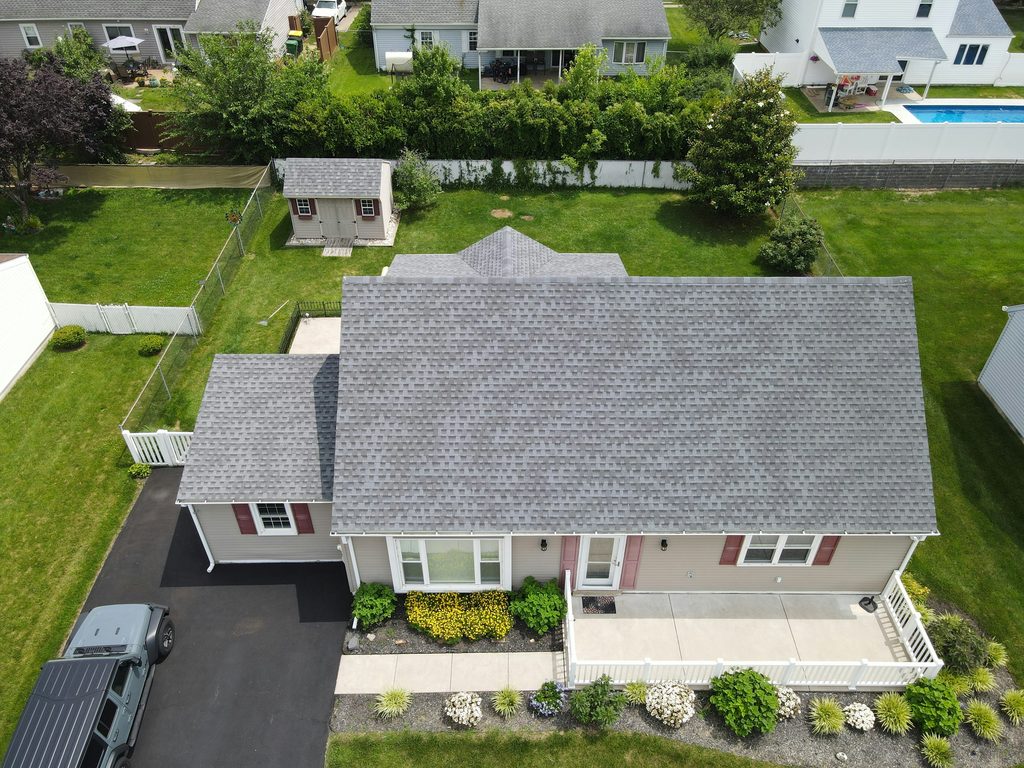
What it means for your agency: Qualify home leads early, roof age, roof material, claims history, distance to brush. Doing it on the first call saves quoting time and keeps you from binding risks that won’t renew. Non-renewal notices also create urgent, motivated shoppers who need an agent’s help.
7. The home-and-auto bundle gap is wide open
This may be the biggest missed opportunity in personal lines. J.D. Power found that among active auto shoppers, 45% have a homeowners policy, but only 20% received a homeowners quote while shopping for auto. Most people shop only their auto policy, and if the auto quote isn’t competitive, the home conversation never happens.
Life events matter too. LexisNexis found that auto shoppers aged 66 and older with an active home listing had a 23.2% attrition rate, versus 19.7% for those without one — a sign that a move triggers shopping.
What it means for your agency: Make “Who insures your home?” a required question on every auto call. A competitive auto quote earns the right to quote home, and a bundle earns retention. Agents who ask for the second policy every time will out-write agents who don’t.
8. AI and telematics are changing how people shop
Consumers are bringing AI into the buying process. In J.D. Power’s first AI Insurance Experience Study, released in August 2026, 29% of auto and home customers had used AI tools to research coverage, manage accounts or shop. Among those who used AI to shop for a new policy, 42% bought one, as reported by the Dallas Express. Yet only 58% of customers say they completely understand their auto policy, down four points from 2025, according to J.D. Power’s 2026 U.S. Auto Insurance Study.
Usage-based insurance is going mainstream at the same time. J.D. Power reports that 20% of customers use a usage-based (telematics) policy, rising to 30% of recent shoppers and 34% of people who bought from a new insurer.

What it means for your agency: Shoppers arrive better informed and more confused at the same time. They’ve seen numbers from an app or a chatbot but still don’t know what their liability limits or roof coverage really mean. That’s where a licensed agent wins. Inside your agency, use technology for the busywork — fast first contact, reminders, scheduling — so agents spend their hours advising and closing.
9. TCPA rules shifted again in 2026
If you call or text leads, compliance is still moving. Three points matter for agencies right now:
- One-to-one consent is off the table, for now. The Eleventh Circuit vacated the FCC’s one-to-one consent rule in January 2025 in Insurance Marketing Coalition v. FCC. Consent still matters: FCC rules require prior express written consent for telemarketing calls made with an autodialer or an artificial or prerecorded voice.
- AI voices count as artificial voices. Since the FCC’s February 2024 ruling, calls that use AI-generated voices fall under the TCPA’s artificial and prerecorded voice rules.
- Opt-out rules just changed. The FCC adopted revised consent-revocation rules on September 30, 2026. Opting out of one type of informational message can now be limited to that category, but an opt-out from marketing calls or texts still stops all marketing from that caller. Callers may also designate one exclusive opt-out method if they disclose it clearly. The changes take effect 30 days after publication in the Federal Register, and the FCC is taking comments on shortening the time to honor opt-outs from ten days to seven.
What it means for your agency: Buy leads that come with documented consent (TrustedForm or Jornaya certificates), honor opt-outs quickly, scrub against Do Not Call lists, and make sure any vendor calling on your behalf follows the same rules. This is general information, not legal advice, run any process changes past your compliance counsel.
Your 2026 playbook: five moves for agencies
- Reach every lead in under five minutes. The widely cited Lead Response Management Study from MIT and InsideSales found that calling a web lead within 5 minutes instead of 30 made it about 100 times more likely to be reached and about 21 times more likely to qualify. With shoppers collecting 3.5 quotes, those minutes decide who sets the price.
- Follow up days, nights and weekends. Many leads don’t answer the first call. A consistent cadence of calls and texts, within consent rules, recovers leads you’ve already paid for.
- Re-quote renewals before competitors do. In a soft market, your best clients are other carriers’ best prospects.
- Ask for the home on every auto call. Close the 45%-vs-20% bundle gap in your own book.
- Qualify home risk on the first call. Roof age, claims and location up front save quoting time and protect retention.
Frequently asked questions
Are auto insurance rates going down in 2026?
For many drivers, rates are flat or slightly lower. Insurify expects the average full-coverage premium to rise only about 1% in 2026 after falling 6% in 2025, and more than a third of Q2 2026 rate revisions were decreases. High-risk drivers and some imported vehicles are still seeing increases.
Why are homeowners insurance premiums still rising in 2026?
Severe weather, higher rebuilding costs and catastrophe exposure keep pushing premiums up, though more slowly. Insurify projects about a 4% national increase in 2026 versus 12% in 2025, with far bigger jumps in states like California.
How can insurance agents win more business in a soft auto market?
Respond to leads within minutes, re-quote renewals proactively, quote home on every auto call, and explain coverage clearly. Shoppers collect 3.5 quotes on average, so the first agent to have a real conversation has the edge.
What changed in TCPA rules for insurance agents in 2026?
The FCC adopted revised consent-revocation rules on September 30, 2026. Marketing opt-outs still stop all marketing calls and texts from that caller, while informational opt-outs can be limited by category. The one-to-one consent rule remains vacated after a January 2025 court decision.
Stop dialing and start quoting
The trends above point to one thing: in 2026, the agency that reaches the shopper first and follows up consistently wins the policy. That’s what Lead Miner does. Our teams work your leads days, nights and weekends, qualify them, and warm-transfer interested prospects to your licensed agents, from a TCPA-compliant contact center built for insurance agencies.
Need more leads to work? Our sister company, M3Leads, delivers consent-verified auto and home insurance inquiries in real time.